There are growing questions about the future of the Gulf economy, which is open to the global economy, amid international polarization and geopolitical events currently affecting the Middle East.
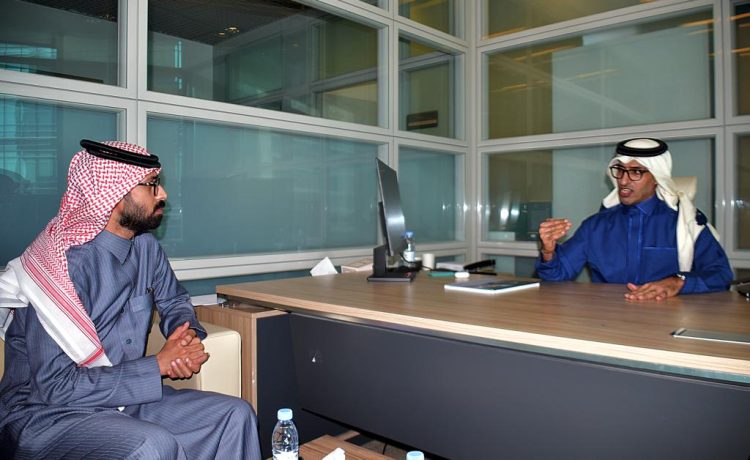
Dr. Raja Al-Marzoqi, General Coordinator of Negotiations for the Gulf Cooperation Council (GCC) countries and head of the GCC negotiating team, stated in an interview with Al-Eqtisadiah that Gulf countries possess strengths and advantages that give them strong negotiating power. He emphasized that if the six GCC countries act as a single bloc, they would rank approximately among the top 10 economies globally, giving them significant economic weight.
He noted that advantages such as large reserves of gas and oil, strategic geographic location, strong domestic purchasing power, and massive sovereign wealth funds provide the region with leverage if utilized properly.
He also revealed that free trade negotiations are under discussion with several countries, including the UK, China, New Zealand, Indonesia, Turkey, and Japan, with negotiation rounds expected to begin soon. He expressed hope that agreements will be signed as quickly as possible.
He stressed the need for Gulf countries to adopt a balanced policy with both East and West and to further activate free trade agreements by embracing an open economy approach to achieve economic benefits.
How do you view the future of Gulf economies?
Gulf economies are open to the global economy, and their growth depends largely on oil and gas exports and their prices in global markets, making growth rates volatile and unstable.
Because Gulf economies are integrated into the global system, they need stable policies toward both East and West and greater activation of free trade agreements. Recently, especially after global conflicts and the COVID-19 pandemic, countries have increasingly adopted bilateral agreements to address challenges facing the World Trade Organization (WTO).
The current situation in the WTO particularly the U.S. blocking appointments to its appellate body has weakened its dispute resolution system, which used to be one of its strongest features.
As a result, countries are increasingly turning to bilateral agreements to reduce risks.
How do Gulf countries balance relations amid U.S.-China trade tensions?
If the world becomes divided into two camps aligned with either the U.S. or China this would not be acceptable for Gulf countries. As middle-income nations, they seek to avoid choosing sides.
To do so, they adopt an open economic approach with both East and West to maximize domestic economic benefits and rely on free trade agreements to regulate relationships.
Will there be a greater shift toward free trade agreements?
Yes, this is the best way to achieve development goals. The ASEAN experience is a good example, as it is based on export-led growth.
ASEAN started as a bloc of 10 countries in the 1960s and faced heavy criticism at the time. Today, trade between ASEAN and China exceeds that between ASEAN and the United States. ASEAN has signed free trade agreements with China and others, contributing to strong economic growth.
Are new agreements expected soon?
Yes. Free trade agreements are crucial for the Gulf. Discussions are ongoing with countries such as the UK, China, New Zealand, Indonesia, Turkey, and Japan. These are still under negotiation, and there is hope they will be concluded soon.
Do global crises encourage closer cooperation?
Gulf countries have unique advantages: geographic location, energy reserves, strong purchasing power, and large sovereign wealth funds. These factors make them attractive partners.
Free trade agreements help open access to markets of 200-300 million people, increase foreign investment by over 30%, improve productivity by about 5%, and reduce production and transport costs leading to sustained economic growth.
Do Gulf countries have strong negotiating positions?
Yes. Acting as a unified bloc, the GCC ranks among the top global economies. Their resources and financial strength give them significant leverage, especially if used effectively.
Their approach favors openness rather than isolation, which supports growth and development goals.
How can the GCC strengthen its global role?
The GCC already plays a major role through oil reserves, sovereign wealth funds, and strategic location. Gulf economies significantly influence the Middle East, with Saudi Arabia playing a leading role.
Future growth can be enhanced through diversification into sectors like renewable energy, technology, semiconductors, and artificial intelligence.
Why is there a shift toward Asia?
Trade with Eastern economies is growing faster than with Western ones. For example, Europe once accounted for 28% of Gulf imports, now only 17%.
China has risen from the 10th-largest partner in the 1990s to the top trading partner today. This reflects broader structural changes in the global economy, including supply chains and investment flows favoring developing countries.
How resilient is the Gulf economy amid geopolitical tensions?
The Gulf economy is closely tied to the global system. Since oil and gas are its main exports, any global economic slowdown or geopolitical conflict affects demand and, therefore, Gulf growth—positively or negatively.
Are you optimistic about the Gulf economy?
Yes. There is optimism due to large financial reserves and strategic goals aimed at economic diversification—reducing dependence on oil without eliminating it.
Expanding free trade agreements will attract investment, improve efficiency, reduce costs, and support long-term growth.
Does the WTO need reform?
Yes, significant reform is needed. There is global consensus on restructuring the WTO to address modern economic changes, especially digital trade.
Issues like cross-border data flows and digital services must be incorporated into future agreements, as they were not adequately addressed when the WTO framework was originally developed.
Al-Eqtisadiah – October 17, 2024